Mining
KASIYA RARE EARTH STUDY POINTS TO ADDITIONAL EXPORT OPPORTUNITY FOR MALAWI
September 26, 2026 / Admin
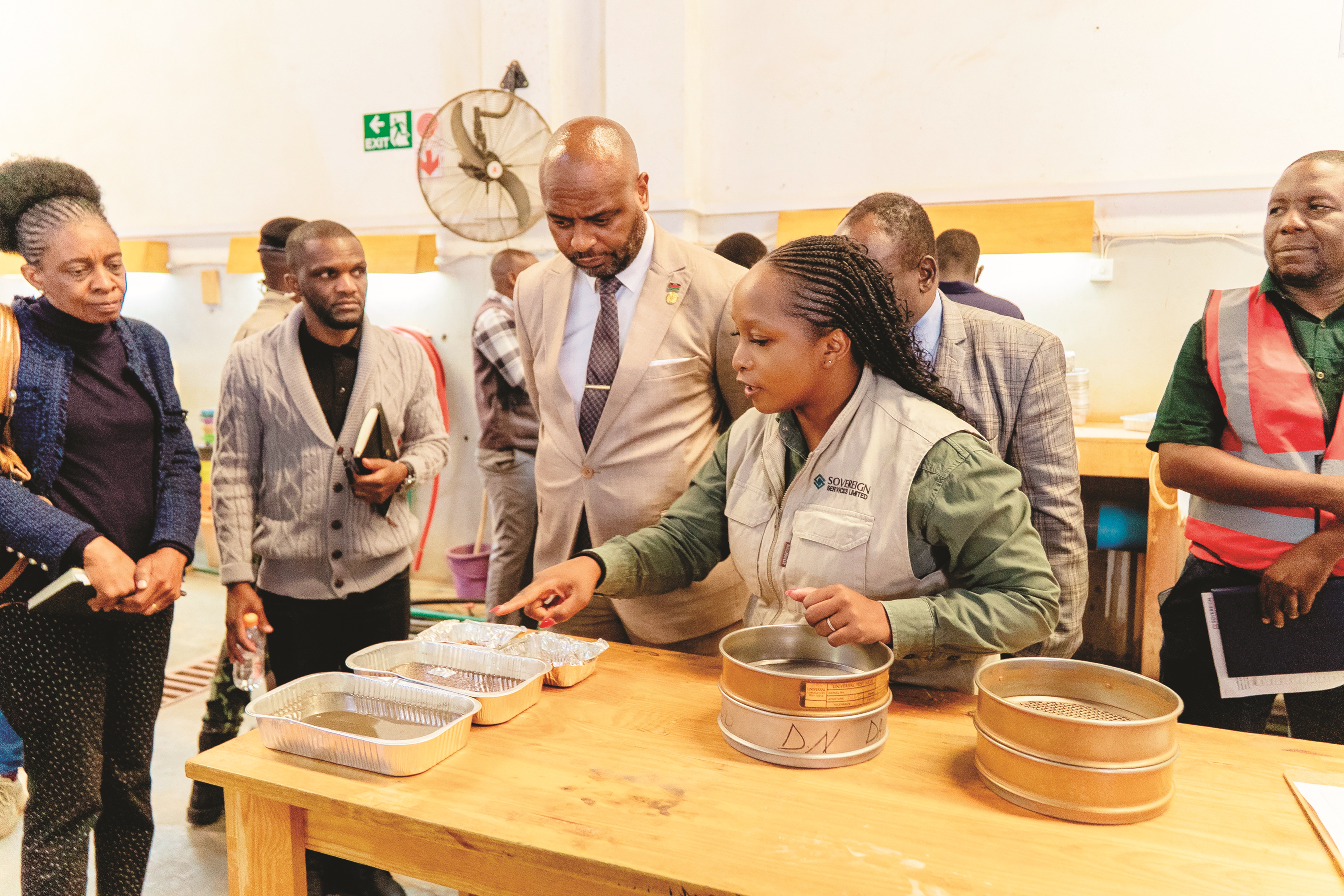
Malawi's planned Kasiya Critical Minerals Project could potentially produce a third critical mineral product after a new study identified the opportunity to recover rare earth minerals from material already processed for rutile and graphite.
If ultimately developed, the additional products could increase the economic value generated by Kasiya, with the potential for additional fiscal revenue for the Malawi government, employment and participation by local businesses and service providers.
It could also broaden Malawi's role in international critical-mineral supply chains at a time when governments and manufacturers are looking to diversify sources of minerals used in electric vehicles, renewable-energy technologies and advanced manufacturing.
Sovereign Metals, operating as Sovereign Services in Malawi, has completed a Scoping Study examining the recovery of a monazite rare earth concentrate at Kasiya, potentially adding another export product without requiring additional mining or an increase in the amount of material extracted.
The proposed rare earth circuit would be integrated into the wider Kasiya operation to recover monazite from material left after rutile and graphite have been extracted. This leftover material is referred to as tailings.
At full production, the study estimates Kasiya could produce approximately 2,626 tonnes of rare earth concentrate a year, containing around 1,485 tonnes of total rare earth oxides.
The concentrate is expected to contain neodymium and praseodymium, which are widely used in high-performance permanent magnets, together with dysprosium, terbium, yttrium, samarium and gadolinium.
The April 2026 Definitive Feasibility Study for Kasiya envisages annual steady-state production of 222,000 tonnes of natural rutile and 275,000 tonnes of natural flake graphite. Rare earth concentrate would represent an additional product stream from the same operation.
The Scoping Study estimates that the rare earth operation could generate additional annual revenue of approximately US$104 million at steady-state production, based on forecast market prices and the expected composition of the concentrate.
It reports an incremental pre-tax net present value of US$722 million and a pre-tax internal rate of return of 151% for the proposed rare earth circuit.
However, the figures are early stage estimates rather than forecasts of actual revenue or profit and depend heavily on future rare earth prices.
Rare earth markets are concentrated and prices can be volatile. Under a more conservative scenario based on floor-price mechanisms previously agreed by the United States Government for selected rare earth oxides, the study reports an incremental pre-tax net present value of US$183 million and a pre-tax internal rate of return of 43%.
The study estimates additional capital expenditure of approximately US$29 million to achieve first rare earth production and total incremental capital expenditure of US$57 million across Kasiya's two planned development phases.
The findings remain subject to further technical studies, financing, regulatory approvals and the wider Kasiya rutile and graphite project proceeding to construction and operation.
The monazite occurs within the same shallow, weathered mineral system that contains Kasiya's rutile and graphite resources.
Sovereign has reported a maiden monazite Mineral Resource Estimate within the open pits already designed for the rutile and graphite project.
Kasiya's existing Definitive Feasibility Study covers a 25-year mining schedule.
The rare earth Scoping Study currently uses a 23-year mine life because the proportion of Inferred Mineral Resources during the final two years does not provide sufficient confidence for those years to be included in the economic assessment.
Further resource work is planned as Sovereign progresses the rare earth assessment.
The proposed recovery process would use gravity separation and flotation after the existing rutile separation stages.
Importantly, the study assumes no additional mining and no additional run-of-mine material would be required to produce the rare earth concentrate.
Sovereign has already completed test work demonstrating the recovery of a rare earth concentrate.
Further work will assess how recovery rates and concentrate quality vary across Kasiya's planned mining schedule.
The next phase is expected to include a feasibility study integrating rare earth recovery into Kasiya's wider development plan.
Sovereign also plans to produce representative samples for potential customers and undertake further work on product specifications, treatment terms, transportation and market requirements.
Sovereign cautioned that a Scoping Study is an early-stage technical and economic assessment.
Development of the rare earth product also depends on the wider Kasiya rutile and graphite project obtaining regulatory approvals, securing financing and proceeding through construction and commissioning.-Langmead & Baker
Share this:
Leave a Comment
Comments
Mining & Trade Review News

Agribusiness News
Subscribe to Newsletter
Rehabilitation:
The establishment of a stable and self-sustaining ecosystem, but not necessarily the one that existed before mining began. In many cases, complete restoration may be impossible, but successful remediation, reclamation, and rehabilitation can result in the timely establishment of a functional ecosystem.
Archives
Remediation:
The cleanup of the contaminated area to safe levels by removing or isolating contaminants. At mine sites, remediation often consists of isolating contaminated material in pre-existing tailings storage facilities, capping tailings and waste rock stockpiles with clean topsoil, and collecting and treating any contaminated mine water if necessary.
Stakeholders Logos